
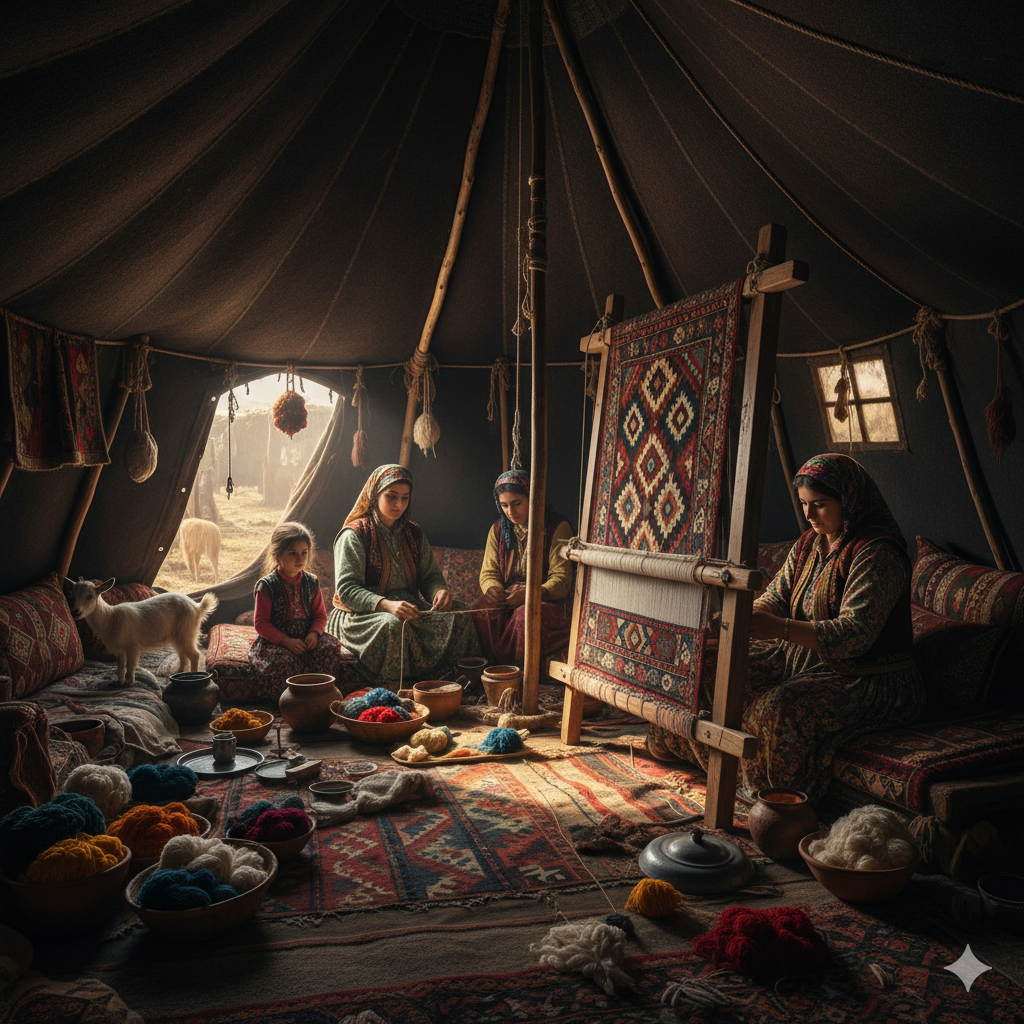
The Silent Artists of Anatolia
In the highlands of Anatolia, among the migrating tribes of the Yörüks, women have carried the legacy of handwoven carpets for centuries. For them, a carpet is not merely a household item — it is an identity, a language of emotion, patience, and tradition. Every knot tells a story.
Each morning, a Yörük woman begins her day at the loom. She spins her own wool, dyes it with colors extracted from roots and plants, and weaves patterns inspired by nature and daily life. Every hue has a meaning: red for love, blue for the sky, green for hope.
Art Born from Nomadic Life
The nomadic lifestyle of the Yörüks shaped the unique character of their carpets. Their motifs reflect mountains, stars, animals, and dreams carried across vast landscapes.
These rugs served both a practical and symbolic purpose — warming the family tent while preserving a lineage of stories through generations.
Every Carpet Tells a Story
Each Yörük carpet is a chapter in the life of the woman who wove it. It may symbolize marriage, birth, migration, longing, or love. The motifs are not mere decoration — they are prayers, emotions, and silent messages expressed through art.
That is why no two Yörük carpets are ever the same; each one is a living piece of heritage.
A Living Tradition
Today, in many villages from the Taurus Mountains to the Aegean region, women still continue this time-honored craft using traditional looms.
Handwoven carpet making remains not just a source of livelihood but a living expression of Turkish culture — a timeless dialogue between the past and the present.
Each thread, each knot, keeps the voice of Anatolia alive.
Discover the inspiring life of Yörük women and their centuries-old carpet weaving tradition. Each handwoven rug carries a story of culture, emotion, and heritage from the heart of Anatolia.
